Your Cart is Empty



Vacuum
Rogers Machinery News is your place for informative, educational articles and case studies about air compressors, pumps, blowers & vacuum systems. Our goal is to provide useful information that will help you make informed product decisions – all to keep your facilities running efficiently with maximum uptime.
5 news articles


Liquids and Vacuum - Considerations & Best Practices
Vacuum systems play a critical role in a wide range of industrial applications, particularly where liquids are involved. Understanding how liquids behave under vacuum and how to optimize system performance is essential for efficiency, safety, and reliability. This article explores key considerations and best practices for working with liquids in vacuum environments.
Written by Jackson Redline


Liquid Ring Vacuum Pump Dos and Don'ts
Liquid ring vacuum pump systems are very versatile and simple in nature. In this article, we discuss the components of a liquid ring vacuum pump, water usage & recirculation options, and best practices when operating this equipment.
Written by Jackson Redline, Engineered System Solutions Project Manager, Rogers Machinery
Estimated read time: 7 minutes
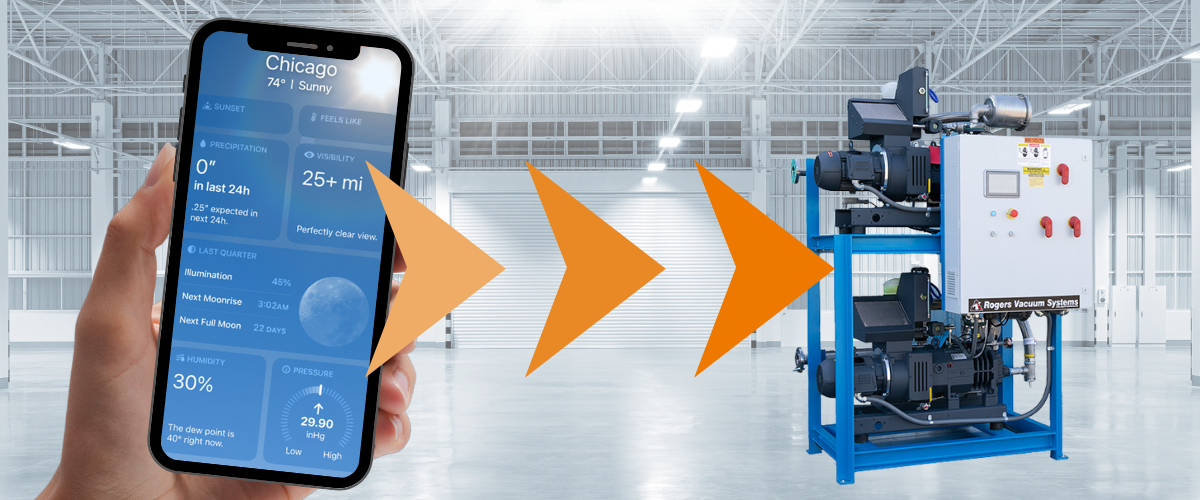

Implementing Vacuum System Innovations in the Real World: How Installation Location & Weather Affect Performance and System Design
High and low atmospheric pressures affect vacuum systems. But how much? In this article, vacuum expert Bryan A. Jensen covers how weather systems on our planet affect vacuum systems and how each type of vacuum usage — utility vacuum or process vacuum — responds to barometric changes in our atmosphere.
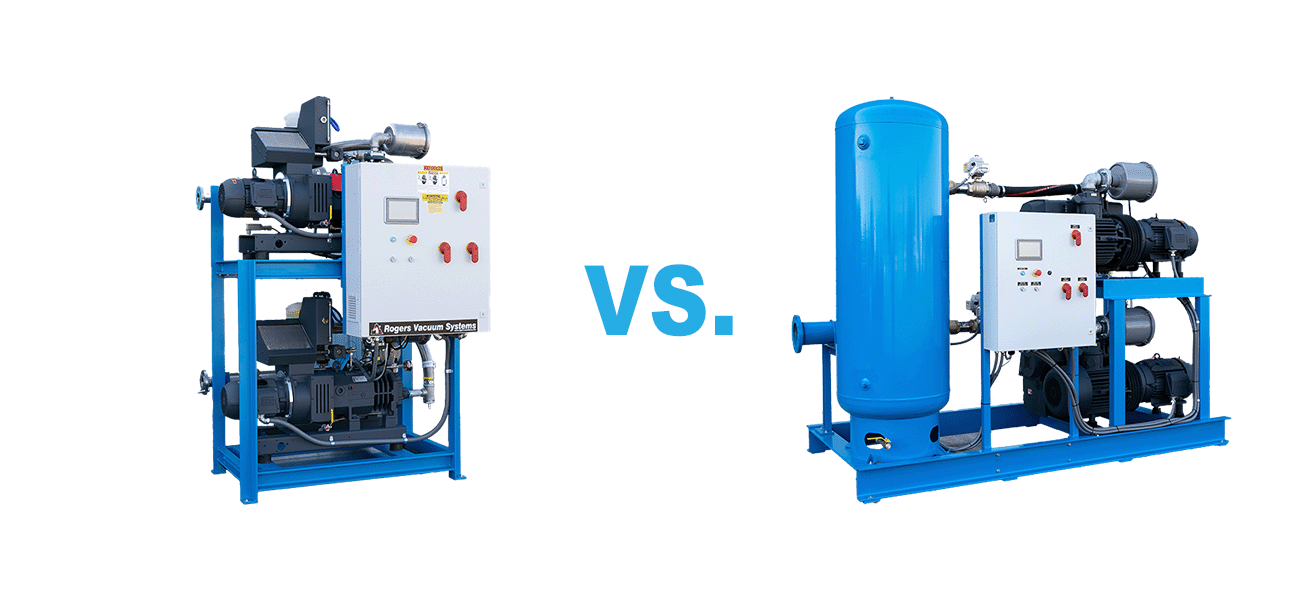

Vacuum Receivers: Full of Vacuum or Full of Myth?
In this article, we’ll discuss some of the uses for receiver tanks for positive pressure systems where the pressure inside the system is greater than atmospheric pressure, and the uses, or lack thereof of, receiver tanks in vacuum systems where the system pressure is less than atmospheric pressure.


Vacuum System Design in Our Freeze-Dried Universe
Freeze dry systems are some of the more thermodynamically active vacuum applications around, with operating pressure requirements firmly categorized in the “medium vacuum” realm. The lessons learned from the principles and subsystems in play can and should be applied broadly; to your own industrial vacuum system whether freeze-drying is your game or not; and, just maybe, in appreciation of the happenstance of our own humanity.
Written by: Bryan A. Jensen